Introduction
Personal blenders have become a useful category of kitchen equipment for people who regularly prepare individual drinks, small portions, and quick blended foods. Instead of setting up a large countertop blender for every small task, a personal blender provides a more compact way to process ingredients in relatively small quantities.
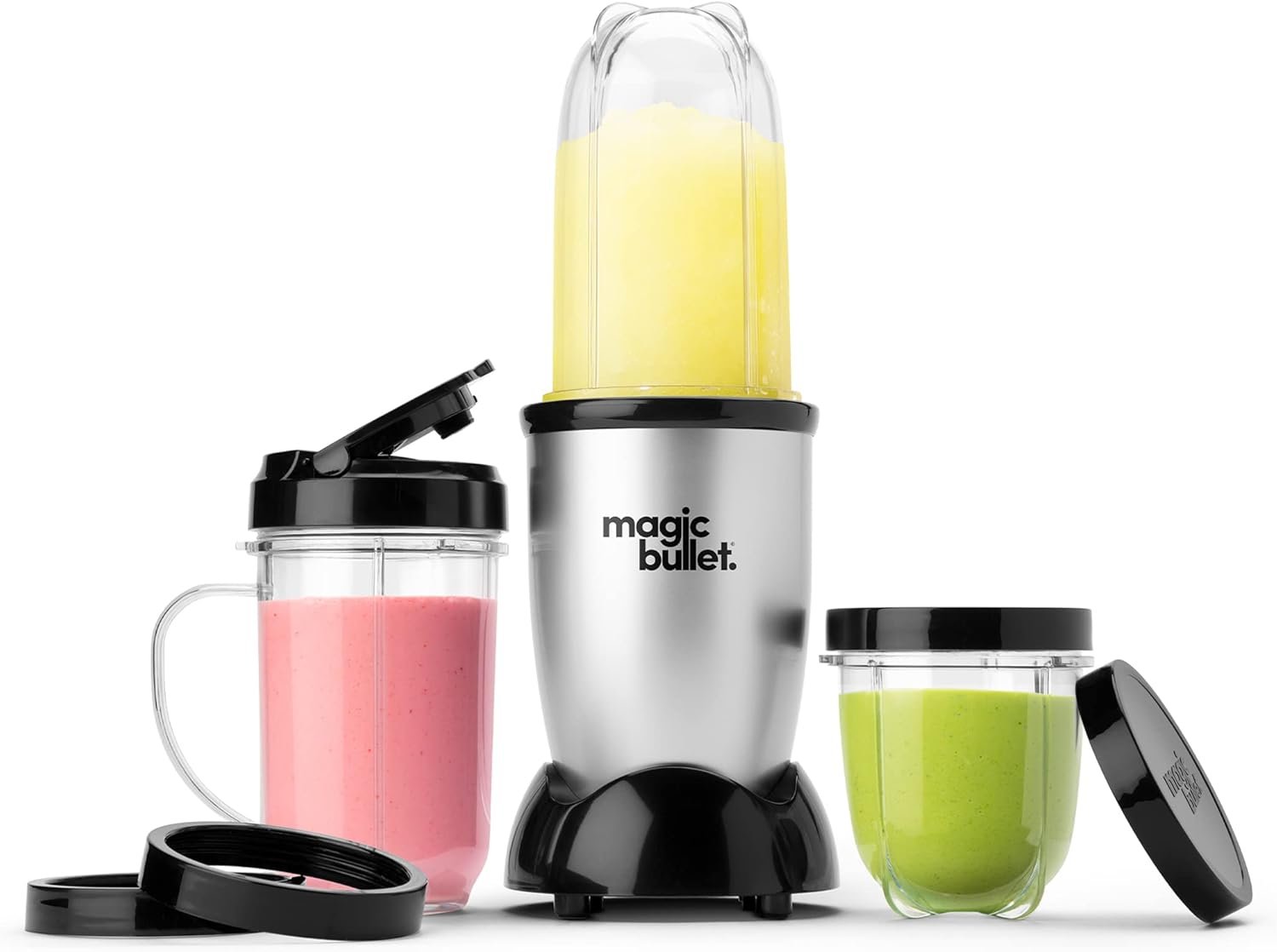
The magic bullet Personal Blender MBR-1101 is a compact blender designed around this style of everyday food preparation. The product is listed with a 250-watt motor, a 22-ounce capacity, and a silver finish. Its intended applications include shakes, smoothies, food preparation, and frozen blending.
A personal blender can be useful in many different routines. Someone might use it in the morning to prepare a fruit smoothie, later in the day to mix a protein drink, and occasionally for chopping or blending smaller food portions. The relatively compact format can also make it practical for kitchens where countertop and storage space are limited.
At the same time, personal blenders have clear boundaries. A compact blender should not automatically be treated as equivalent to a large high-powered countertop blender. The amount and type of ingredients that can be processed depend on the motor, blade assembly, container, and manufacturer’s instructions. Frozen ingredients, dense foods, and large quantities can place more demand on a blender than thin liquids and soft fruits.
Understanding those distinctions can help users get more practical value from the appliance while avoiding unsuitable applications.
This guide explores the magic bullet Personal Blender MBR-1101 from an informational perspective. It covers its general design, the role of its 250-watt motor and 22-ounce capacity, practical uses for smoothies and shakes, food-preparation ideas, frozen ingredients, cleaning and maintenance considerations, who may find this category useful, and how personal blenders compare with other types of kitchen equipment.
Understanding the Personal Blender Category
A personal blender is generally designed for relatively small batches.
Rather than preparing several servings at once, the appliance focuses on individual portions.
That makes it different from a large countertop blender, which may have a much larger pitcher and is typically intended for preparing several servings.
The personal-blender format can be useful when you want to:
- Prepare one smoothie
- Mix a shake
- Blend fruit
- Process a small amount of ingredients
- Prepare a quick breakfast
- Make a small frozen drink
- Handle certain light food-preparation tasks
The smaller container can also make ingredient management easier.
Instead of measuring a large quantity into a pitcher, you can prepare a smaller portion based on the container’s capacity.
Key Features of the magic bullet Personal Blender
The product is identified as the magic bullet Personal Blender MBR-1101.
Its listed characteristics include:
- 250-watt motor
- 22-ounce capacity
- Silver finish
- Personal-blender format
- Smoothie and shake preparation
- Food-preparation applications
- Frozen blending capability
Each characteristic affects how the blender fits into a kitchen.
250-Watt Motor
The blender uses a 250-watt motor.
Motor wattage provides an indication of the electrical power available to the motor, but wattage alone does not determine how effectively a blender handles every ingredient.
Blade design, container shape, ingredient quantity, moisture level, and blending technique also matter.
A 250-watt personal blender is best understood as a compact appliance intended for everyday small-batch tasks rather than as a commercial food-processing machine.
What the Motor Can Mean in Everyday Use
For relatively soft ingredients and liquids, a compact motor can be appropriate.
Examples include:
- Bananas
- Berries
- Yogurt
- Milk
- Juice
- Soft fruits
- Cooked vegetables
- Protein powders
Harder ingredients require more consideration.
Ice and frozen fruit can place additional resistance on the blades.
That is why it is important to follow the manufacturer’s guidance about frozen ingredients and loading.
22-Ounce Capacity
The listed capacity is 22 ounces.
This puts the blender in the personal-use category.
The capacity can be useful for an individual smoothie, shake, or other drink.
However, the usable quantity may be lower than the container’s maximum capacity depending on the recipe.
Blending requires room for ingredients to move.
If a container is filled too close to the top, ingredients may not circulate efficiently.
Why Container Capacity Matters
A larger container is useful when preparing multiple servings.
A smaller container, however, can be more practical for one person.
A 22-ounce format can be convenient when you want a single drink rather than a full pitcher.
It can also make portion planning easier.
Smoothie Preparation
Smoothies are one of the most natural applications for a personal blender.
A basic smoothie might include:
- Banana
- Berries
- Yogurt
- Milk or plant-based milk
- Ice or frozen fruit
- Optional sweetener
The exact combination depends on the recipe.
Building a Balanced Smoothie
A useful way to think about smoothie preparation is in layers.
Liquid
Start with an appropriate liquid such as:
- Milk
- Almond beverage
- Soy beverage
- Oat beverage
- Coconut water
- Juice
Soft Ingredients
Add ingredients such as:
- Banana
- Yogurt
- Soft fruit
Frozen Ingredients
Frozen berries or other frozen fruit can provide a cold texture.
Optional Additions
You can add ingredients such as:
- Nut butter
- Seeds
- Protein powder
- Cocoa
- Cinnamon
The total quantity should remain appropriate for the container.
Why Adding Liquid First Can Help
When blending, the blade needs ingredients to circulate.
Adding some liquid first can help create movement around the blade assembly.
Dry or extremely dense ingredients placed directly around the blades may be harder to process.
The appropriate order depends on the recipe, but starting with liquid is often a useful general technique for smoothie preparation.
Berry Smoothie
A simple berry smoothie can combine:
- Strawberries
- Blueberries
- Banana
- Yogurt
- Milk
If using frozen berries, allow enough liquid for the ingredients to move.
Blend until the desired consistency is reached.
Banana Smoothie
Bananas are naturally soft and blend easily.
A simple combination could include:
- Banana
- Milk
- Yogurt
- Cinnamon
This is a relatively straightforward application for a personal blender.
Green Smoothies
Green smoothies often contain leafy vegetables.
Examples include:
- Spinach
- Kale
- Cucumber
- Celery
Because leafy vegetables can be fibrous, chopping them into smaller pieces before blending can help.
Adding sufficient liquid is also important.
Protein Smoothies
A personal blender can also be useful for protein-based drinks.
Possible ingredients include:
- Milk
- Protein powder
- Banana
- Berries
- Yogurt
- Nut butter
Protein powders vary considerably in how they behave in liquid.
Some dissolve easily, while others may produce thicker mixtures.
Protein Powder and Blending
When using protein powder, add enough liquid for the mixture to circulate.
If the mixture becomes very thick, do not continue forcing the blender.
Instead, stop and adjust the liquid or ingredients according to the recipe.
A personal blender is not designed to process every possible protein-shake combination.
Frozen Fruit Blending
The product is described for frozen blending, which can be useful for cold smoothies and similar drinks.
Frozen ingredients generally create more resistance than fresh, soft fruit.
A practical approach is to combine frozen ingredients with sufficient liquid.
Avoid packing the container tightly with frozen ingredients.
Using Frozen Berries
Frozen berries can provide a cold smoothie without requiring large amounts of ice.
A combination such as:
- Frozen strawberries
- Frozen blueberries
- Banana
- Milk
can create a thick smoothie.
The banana provides additional softness and can help with texture.
Using Frozen Mango
Frozen mango can also be used in smoothie recipes.
Combine it with:
- Yogurt
- Milk
- Orange juice
- Banana
The amount of liquid can be adjusted depending on the desired consistency.
Frozen Ingredients and Motor Load
Frozen food can make the blender work harder.
If the blades become stuck or the mixture stops circulating, turn the blender off.
Do not assume that continuing to operate the motor under heavy resistance is appropriate.
Rearrange the ingredients or add suitable liquid according to the recipe.
Ice
Ice is harder than soft fruit and can be demanding for compact blenders.
Whether and how much ice can be used should follow the manufacturer’s instructions.
If a recipe calls for a large amount of ice, a blender specifically designed for heavy ice processing may be more suitable.
Making Shakes
Milkshakes are another natural use.
A simple shake can include:
- Ice cream
- Milk
- Flavoring
- Fruit
Because ice cream is soft, it can be easier to process than hard frozen ingredients.
However, thick mixtures can still require appropriate liquid and portion sizes.
Chocolate Milkshake
A basic chocolate shake can use:
- Milk
- Chocolate ice cream
- Cocoa powder
- Optional chocolate syrup
Blend until combined.
Avoid filling the container excessively.
Fruit Shake
Combine fruit, milk, yogurt, and a small amount of sweetener.
Soft fruit such as banana or strawberries is generally easier to process than hard fruit.
Peanut Butter Shake
Nut butter can make a shake significantly thicker.
Use enough liquid to keep the mixture moving.
If the blender struggles, stop and adjust the consistency rather than continuing to operate it under excessive resistance.
Food Preparation Applications
The magic bullet format is not limited to beverages.
The product is also intended for food preparation.
Small quantities of certain foods can be processed depending on their texture and the manufacturer’s recommendations.
Potential applications include:
- Small sauces
- Dips
- Dressings
- Soft cooked vegetables
- Small ingredient combinations
- Certain spreads
The key word is small.
A personal blender is not a replacement for a full food processor.
Making Salad Dressing
A personal blender can help combine ingredients for a simple dressing.
For example:
- Olive oil
- Lemon juice
- Mustard
- Honey
- Herbs
Blend until combined.
The result can be used immediately or stored according to food-safety guidelines.
Blending a Simple Sauce
A small quantity of sauce can be prepared by blending soft ingredients.
Tomatoes, cooked vegetables, herbs, and suitable liquids can be processed depending on the recipe.
Hot ingredients require special caution.
Do not assume that the blender container is suitable for boiling-hot liquids.
Making Salsa
Soft salsa ingredients can be processed in small quantities.
Examples include:
- Tomato
- Onion
- Cilantro
- Jalapeño
- Lime juice
The texture can be controlled by using short blending periods.
However, if the recipe requires a chunky salsa, a food processor or manual chopping may provide better control.
Making Dips
A small blender can help with some smooth dips.
Potential examples include:
- Yogurt-based dips
- Smooth bean mixtures
- Certain vegetable dips
- Simple sauces
Thick dips may require additional liquid.
Small Portions of Cooked Vegetables
Cooked vegetables are softer than raw vegetables.
That makes them easier for a compact blender to process.
Potential applications include:
- Small vegetable purées
- Smooth soups prepared from cooled ingredients
- Vegetable sauces
Again, temperature is important.
Smooth Soup Components
A personal blender may be useful for blending a small amount of soup that has been cooled appropriately.
However, extremely hot liquids can create pressure and splashing risks in enclosed containers.
Always follow the manufacturer’s instructions for temperature limitations.
Homemade Baby Food Considerations
Some parents use small blenders to prepare soft food.
The compact format can be useful for small portions.
Possible foods include:
- Cooked carrots
- Cooked squash
- Banana
- Soft fruits
- Cooked sweet potato
Food should be prepared appropriately for the child’s age and dietary requirements.
The blender itself does not determine food safety.
Coffee and Frozen Drinks
Personal blenders can also be used for certain cold coffee drinks.
For example:
- Iced coffee
- Coffee shakes
- Blended mocha drinks
The ingredients should be sufficiently liquid to circulate.
Iced Coffee Smoothie
Combine chilled coffee with:
- Milk
- Banana
- Ice
- Optional cocoa
Blend according to the manufacturer’s recommendations for frozen ingredients.
Smoothie Bowls
A very thick smoothie mixture can be used as the base of a smoothie bowl.
However, thick mixtures are more difficult for compact blenders.
If the mixture is too thick to circulate, do not force the motor.
Add liquid or use a blender specifically designed for thick preparations.
Portion Control
The 22-ounce capacity can naturally support single-serving preparation.
This can make it easier to prepare approximately the amount you intend to drink.
Rather than making a large pitcher of smoothie and storing the remainder, you can prepare one portion at a time.
Fresh vs. Frozen Ingredients
Both fresh and frozen ingredients have their advantages.
Fresh Fruit
Fresh fruit generally contains more water and may blend easily.
Frozen Fruit
Frozen fruit creates a colder, thicker drink.
It can also reduce the need for additional ice.
The choice depends on the recipe and desired texture.
Preparing Ingredients Before Blending
Cut larger ingredients into smaller pieces.
This is especially useful for:
- Apples
- Carrots
- Celery
- Frozen fruit
- Large pieces of vegetables
Smaller pieces can reduce the amount of work required from the blade and motor.
Avoiding Overloading
A personal blender works best when the ingredients have enough room to move.
Overloading can cause:
- Poor circulation
- Uneven blending
- Longer blending times
- Increased motor strain
If a recipe is too large for one batch, divide it into smaller portions.
How to Layer Ingredients
There is no universal loading order for every recipe.
However, a useful general approach is:
- Liquid
- Soft ingredients
- Powders
- Fresh produce
- Frozen ingredients
The goal is to provide enough liquid around the blade for movement.
Who May Find This Personal Blender Useful?
People Making Individual Smoothies
If you generally prepare one smoothie at a time, a 22-ounce personal blender can be convenient.
Students
Students living in dorms or small apartments may appreciate equipment that takes up limited space.
Always check housing rules regarding appliances.
Small Households
People cooking primarily for one or two people may not need the capacity of a large countertop blender.
Busy Mornings
A personal blender can support a simple breakfast routine.
Prepare ingredients in advance, blend the drink, and clean the appliance immediately afterward.
Coffee and Shake Preparation
People who regularly prepare individual shakes, protein drinks, and blended coffee beverages may find a personal blender useful.
Small Kitchens
Countertop space is valuable.
A compact appliance can be easier to integrate into a smaller kitchen than a large pitcher blender.
People Preparing Small Food Portions
The appliance can also help with certain small-batch food preparation tasks.
Important Things to Consider
Personal Blender Does Not Mean Unlimited Blending
A compact blender has limits.
The 250-watt motor and personal-size format are designed for a particular class of tasks.
Do not expect it to perform every job that a high-powered blender or food processor can handle.
Dense Mixtures
Thick mixtures can prevent ingredients from circulating.
If the blades are spinning but the food is not moving, stop the blender.
Adjust the consistency or quantity.
Frozen Ingredients
Frozen foods require more power than soft fresh ingredients.
Use the manufacturer’s recommended approach.
Avoid excessive amounts of hard frozen ingredients in a single batch.
Hard Ingredients
Ingredients such as:
- Whole nuts
- Large raw carrots
- Large ice cubes
- Hard frozen fruit
can place substantial demand on a compact blender.
If a recipe relies heavily on these ingredients, check whether the blender is appropriate before proceeding.
Hot Ingredients
Hot food requires additional care.
Enclosed blending containers can create pressure when hot liquids produce steam.
Do not blend boiling liquids unless the manufacturer explicitly states that the appliance is designed for that application.
Container Capacity
The stated capacity is 22 ounces.
Do not fill the container beyond the manufacturer’s recommended maximum.
Leave enough room for ingredients to move.
Cleaning After Smoothies
Smoothie ingredients can leave residue around the blade assembly.
Clean promptly.
Dried fruit, yogurt, and protein powder are more difficult to remove once they harden.
Cleaning After Protein Powder
Protein powder can settle into small spaces.
Rinse the container and blade area soon after use.
Follow the manufacturer’s cleaning instructions for removable components.
Cleaning After Nut Butter
Nut butter is sticky and can cling to the container.
Remove the residue while it is still fresh.
Avoid using sharp objects to scrape around the blade assembly.
Blade Safety
Blades are sharp.
Use caution when handling the blade assembly during cleaning or storage.
Never reach into the blade area while the appliance is connected to power.
Follow the manufacturer’s instructions for disassembly.
Inspecting the Blade Assembly
Over time, inspect the blade area for:
- Food buildup
- Damage
- Loose components
- Unusual movement
- Signs of wear
If something appears damaged, stop using the appliance until it can be evaluated according to the manufacturer’s guidance.
Motor Behavior
If the motor sounds unusually strained, stop the appliance.
Possible causes include:
- Too many ingredients
- A mixture that is too thick
- Too many frozen ingredients
- A blade obstruction
Continuing to operate a motor under excessive resistance is not a good practice.
Noise
Blenders naturally produce noise because of the motor and rapidly rotating blades.
Harder ingredients can produce more noticeable vibration and sound.
If the appliance develops an unusual grinding or mechanical sound, stop operation and inspect it according to the manufacturer’s guidance.
Countertop Stability
Place the blender on a stable, level surface.
This is particularly important when blending thicker ingredients.
Avoid using it near the edge of the counter.
Food Safety
Blending does not make food automatically safe.
Perishable ingredients such as:
- Milk
- Yogurt
- Fresh fruit
- Cooked vegetables
should be handled and stored appropriately.
Clean the blender after use to reduce the risk of food residue remaining in the container.
Storage
A personal blender can be easier to store than a large countertop blender.
The compact format may fit in:
- Kitchen cabinets
- Pantry shelves
- Appliance drawers
- Open shelving
Before storing, ensure removable parts are clean and dry according to the manufacturer’s recommendations.
Personal Blender vs. Full-Size Blender
The biggest distinction is capacity and intended workload.
| Category | Personal Blender | Full-Size Countertop Blender |
|---|---|---|
| Typical batch | Individual | Multiple servings |
| Counter space | Lower | Higher |
| Storage | Easier | More demanding |
| Smoothies | Suitable for small portions | Suitable for small or large batches |
| Large frozen batches | More limited | Generally more capable |
| Family-size preparation | Limited | More practical |
| Portability | Relatively convenient | Less convenient |
A personal blender is most appropriate when small portions are the priority.
Personal Blender vs. Immersion Blender
An immersion blender is designed to blend directly inside a pot, bowl, or other container.
It is particularly useful for:
- Soups
- Sauces
- Purées
A personal blender is more naturally suited to individual drinks and contained small-batch recipes.
Personal Blender vs. Food Processor
A food processor is designed for chopping, slicing, shredding, and processing a wider range of solid foods.
It generally provides more versatility for food preparation.
A personal blender is more specialized toward liquids, smoothies, shakes, and blending.
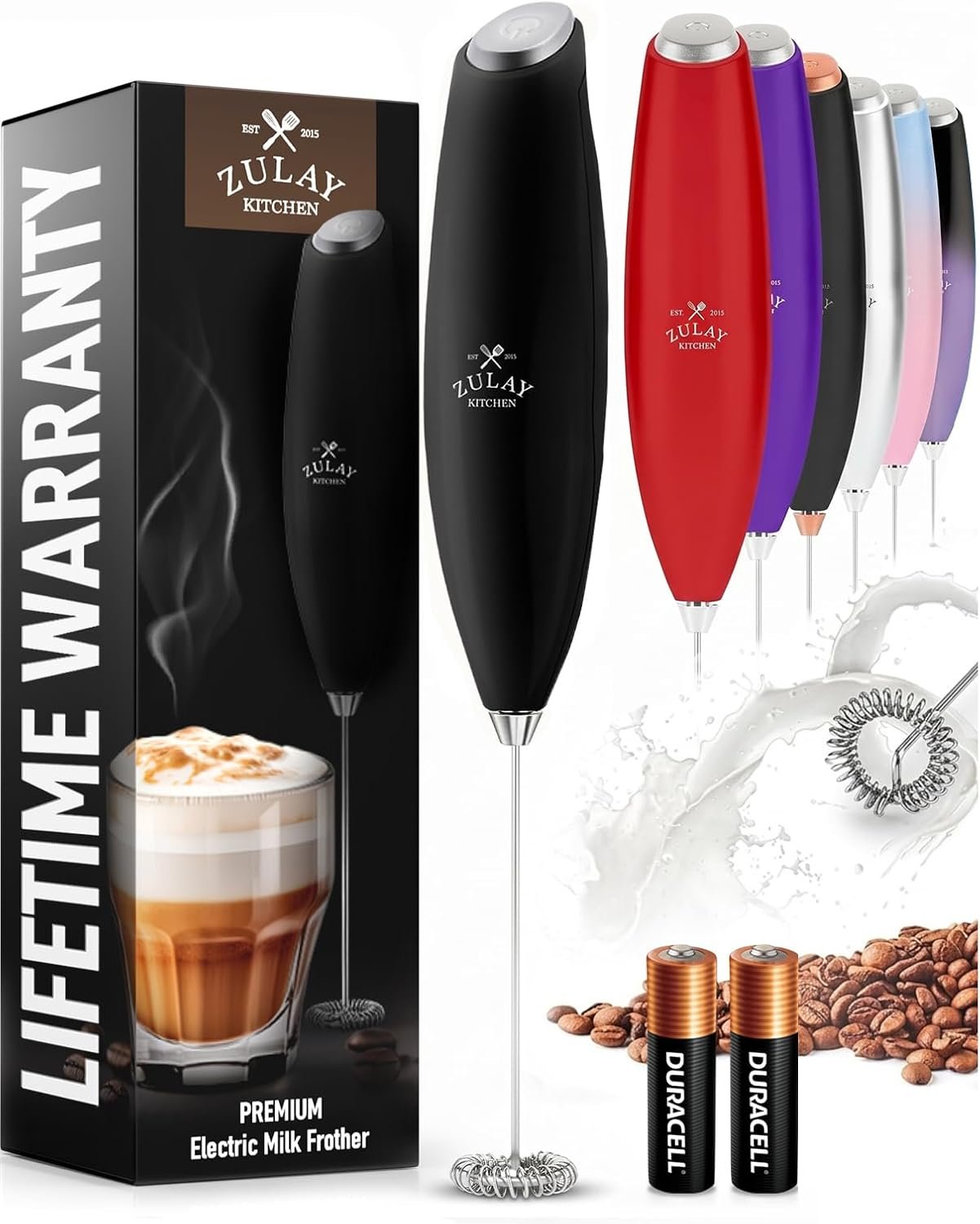
Personal Blender vs. Handheld Milk Frother
A milk frother is designed to aerate liquids.
It is useful for:
- Coffee
- Milk foam
- Matcha
- Protein drinks
A personal blender can blend solid ingredients and produce smoothies.
These two tools therefore serve different purposes.
Choosing the Right Appliance for the Recipe
A useful rule is to look at the ingredients before choosing the appliance.
Mostly Liquid + Soft Fruit
A personal blender is a natural choice.
Large Frozen Batch
A larger blender may be more appropriate.
Chopping Vegetables
A food processor may be better.
Puréeing Soup in a Pot
An immersion blender can be more convenient.
Creating Milk Foam
A handheld frother is the more specialized tool.
Everyday Recipe Ideas
Strawberry Banana Smoothie
Combine:
- Fresh or frozen strawberries
- Banana
- Milk
- Yogurt
Blend until smooth.
Mango Yogurt Smoothie
Use:
- Mango
- Yogurt
- Milk
- Optional honey
Frozen mango can create a colder texture.
Blueberry Oat Smoothie
Combine:
- Blueberries
- Milk
- Banana
- Oats
- Yogurt
Blend thoroughly.
Because oats can thicken the drink, use enough liquid for the ingredients to circulate.
Chocolate Protein Shake
Combine:
- Milk
- Chocolate protein powder
- Banana
- Cocoa
- Optional nut butter
The consistency can be adjusted with additional liquid.
Vanilla Breakfast Shake
A simple breakfast shake can include:
- Banana
- Milk
- Yogurt
- Vanilla
- Cinnamon
Peanut Butter Banana Smoothie
Use:
- Banana
- Milk
- Peanut butter
- Yogurt
- Optional cinnamon
Nut butter can make the mixture thick, so adequate liquid is important.
Green Fruit Smoothie
Combine:
- Spinach
- Banana
- Apple
- Lemon juice
- Water
Cut larger pieces of fruit into smaller portions before blending.
Simple Salad Dressing
Combine:
- Olive oil
- Lemon juice
- Mustard
- Honey
- Herbs
Blend briefly until the ingredients are combined.
Small Tomato Sauce
Soft tomatoes can be blended with:
- Garlic
- Herbs
- Olive oil
- Seasoning
Cooked ingredients should be cooled appropriately before enclosed blending unless the manufacturer specifically permits hot blending.
Homemade Salsa
For a smoother salsa:
- Tomato
- Onion
- Cilantro
- Lime juice
- Jalapeño
Use short blending intervals rather than continuously blending if you want more texture.
Tips for More Consistent Results
Start With Enough Liquid
Liquid helps ingredients circulate around the blades.
Cut Ingredients Into Smaller Pieces
Large pieces can be harder for a compact blender to process.
Don’t Pack the Container
Leave space for movement.
Use Short Blending Intervals When Appropriate
For ingredients that need texture control, short pulses or brief blending periods can prevent over-processing.
Stop When the Desired Texture Is Reached
Longer blending does not always produce a better result.
Adjust Rather Than Force
If the mixture becomes too thick, stop and adjust it.
Do not continue running the motor against a mixture that is not moving.
Clean Promptly
Immediate cleaning is easier than removing dried residue later.
Frequently Asked Questions
What is the magic bullet Personal Blender MBR-1101?
It is a compact personal blender designed for individual food and beverage preparation. The listed model has a 250-watt motor and a 22-ounce capacity.
What can the magic bullet Personal Blender be used for?
It can be used for applications such as smoothies, shakes, certain frozen drinks, and small food-preparation tasks, depending on the ingredients and manufacturer’s instructions.
What is the motor wattage?
The listed motor power is 250 watts.
What is the capacity?
The listed capacity is 22 ounces.
Is it suitable for smoothies?
Yes.
Smoothies are one of the primary applications for a personal blender.
Can it blend frozen fruit?
The product is described for frozen blending.
Frozen ingredients can create more resistance than fresh ingredients, so use appropriate quantities and follow the manufacturer’s instructions.
Can it make protein shakes?
Yes.
It can be used for individual protein drinks, provided the ingredients remain within the blender’s intended operating range.
Can I use protein powder?
Yes.
Protein powder can be blended with milk, water, yogurt, fruit, or other suitable ingredients.
Can I make milkshakes?
Yes.
Milkshakes are an appropriate type of small-batch beverage for a personal blender.
Can I make green smoothies?
Yes.
Soft leafy greens such as spinach can be included in smoothies.
Chopping fibrous ingredients into smaller pieces can help.
Can it crush ice?
Do not assume that every type or quantity of ice is appropriate.
Check the manufacturer’s instructions before using ice, particularly large quantities or hard ice.
Can it blend nuts?
A compact blender should not automatically be treated as a nut-processing machine.
Whole nuts and thick nut mixtures can place significant load on the motor.
Follow the manufacturer’s guidance.
Can it make sauces?
It can be used for certain small sauces and dressings.
Very thick sauces may require more suitable equipment.
Can it make salsa?
Small quantities of soft salsa ingredients can be processed.
Use short blending periods if you want to retain some texture.
Can it blend soup?
It may be useful for small quantities of appropriately cooled soup ingredients.
Do not blend boiling-hot liquids in an enclosed container unless the manufacturer specifically permits it.
Can I make baby food with it?
A personal blender can process suitable soft foods into small portions.
However, food safety, ingredient selection, and texture requirements should be considered separately from the blender itself.
Is 22 ounces enough for one smoothie?
For many individual smoothie recipes, 22 ounces provides a practical personal serving size.
The actual amount depends on the recipe and ingredients.
Can I prepare multiple servings at once?
The 22-ounce capacity is designed around personal portions.
For multiple servings, you may need to prepare separate batches or use a larger blender.
Is a personal blender easier to store than a full-size blender?
Generally, the personal format requires less countertop and storage space than a full-size pitcher blender.
Is it suitable for a small kitchen?
The compact personal-blender format can be useful where counter and cabinet space are limited.
Can I use hot liquids?
Do not assume the container is designed for hot liquids.
Follow the manufacturer’s instructions regarding temperature limits.
Why does my smoothie stop moving?
The mixture may be too thick, the container may be overloaded, or there may not be enough liquid.
Stop the blender and adjust the mixture rather than forcing the motor to continue.
Why are frozen ingredients difficult to blend?
Frozen ingredients are harder than fresh ingredients and create more resistance against the blades.
Use appropriate quantities and enough liquid to encourage circulation.
Why is my smoothie too thick?
Possible solutions include adding more liquid or reducing the quantity of dense ingredients.
Stop the blender before making adjustments.
Why is my smoothie too thin?
Reduce the amount of liquid or add more soft or frozen ingredients, depending on the recipe.
How should I clean the blender?
Follow the manufacturer’s cleaning instructions.
Clean the container and appropriate removable components after use, paying attention to the blade area.
Is the blade dangerous to handle?
The blades are sharp and should be handled carefully.
Never reach into the blade area while the appliance is connected to power.
Should I clean it immediately after making a protein shake?
Yes.
Protein powder can dry and adhere to the container and blade area.
Prompt cleaning makes residue easier to remove.
Can I leave smoothie ingredients inside the blender overnight?
It is better to clean the appliance after use rather than leaving perishable ingredients inside.
Follow appropriate food-storage practices.
Can I use the blender every day?
A personal blender can be used regularly when operated within its intended specifications and maintained according to the manufacturer’s instructions.
What should I do if the motor sounds strained?
Stop the blender.
Check whether the mixture is too thick, the container is overloaded, or an ingredient is obstructing the blades.
Adjust the contents before trying again.
Conclusion
The magic bullet Personal Blender MBR-1101 is designed around the idea of convenient small-batch blending.
With a listed 250-watt motor and 22-ounce capacity, it fits into the personal-blender category rather than the larger countertop-blender category. That makes its most natural applications individual smoothies, shakes, protein drinks, small frozen beverages, and selected food-preparation tasks.
For smoothie preparation, the compact format can work particularly well with ingredients such as bananas, berries, yogurt, milk, and other soft fruits. Frozen fruit can be used for colder and thicker drinks, although frozen ingredients naturally place more demand on the motor and blades.
The blender can also support simple protein shakes. Protein powder, milk, yogurt, fruit, and other suitable ingredients can be combined in individual portions. The consistency should remain fluid enough for the ingredients to circulate properly.
Beyond drinks, the appliance can be useful for certain small food-preparation jobs. Dressings, sauces, dips, soft vegetables, and small quantities of salsa are examples of applications that may fit the personal-blender format.
There are important boundaries.
A 250-watt personal blender should not automatically be considered suitable for every dense or hard ingredient. Large quantities of ice, whole nuts, thick nut butter, heavy mixtures, or large frozen batches can demand more power than a compact appliance is intended to provide. When ingredients stop circulating, the appropriate response is to stop the appliance and adjust the quantity or consistency rather than continuing to run the motor under heavy resistance.
The 22-ounce capacity is another defining characteristic. It is useful for individual portions, but it is not intended to replace a large pitcher when preparing drinks for an entire family.
The way ingredients are loaded can also affect results. Starting with some liquid, cutting larger ingredients into smaller pieces, avoiding excessive filling, and leaving enough room for ingredients to circulate can make blending more consistent.
Cleaning is equally important. Smoothies, yogurt, protein powder, nut butter, and other sticky ingredients can leave residue around the container and blade assembly. Cleaning shortly after use can make maintenance easier. The blades should always be handled carefully, and the motor housing should be treated according to the manufacturer’s cleaning instructions.
Compared with a full-size blender, the personal format emphasizes convenience and individual portions. Compared with an immersion blender, it is more naturally suited to contained drinks. Compared with a food processor, it is more focused on blending rather than chopping and slicing.
That makes the appliance most relevant to people whose kitchen routine centers on single-serving smoothies, shakes, protein drinks, frozen beverages, and small food-preparation tasks.
The main advantage of this category is simplicity: prepare a manageable quantity, blend it, clean the appliance, and store it without committing the counter space required by larger equipment.
For users whose recipes match those capabilities, a compact personal blender can become a practical part of everyday food and beverage preparation.